

The Real Cost of Professional Web Development, Strategy, Design, AI, and Ownership
If you have ever compared website pricing, you have probably seen something like this:
- $500 websites on Fiverr
- $99 templates
- AI tools that generate sites in minutes
- Agencies quoting $10,000 to $100,000+
At first glance, they look similar.
So why the massive difference?
Because you are not comparing the same thing.
The $500 vs $10,000 Website
A $500 website is something that exists.
A $10,000+ website is something that performs.
One is a digital brochure.
The other is a system designed to:
- Attract attention
- Build trust
- Convert visitors
- Generate revenue
They are not substitutes.
The Biggest Misconception About Websites
Here is where most people get it wrong.
A client sees a homepage design and thinks:
"This looks great. When can we launch?"
That single design mockup is not your website.
It is barely the beginning.
Think of it like an architect showing you the front entrance of your dream home.
It looks beautiful.
But you would never expect to move in tomorrow.
You still need:
- Foundation work
- Framing
- Electrical
- Plumbing
- Insulation
- Systems that make the house livable
Websites work in a similar way.
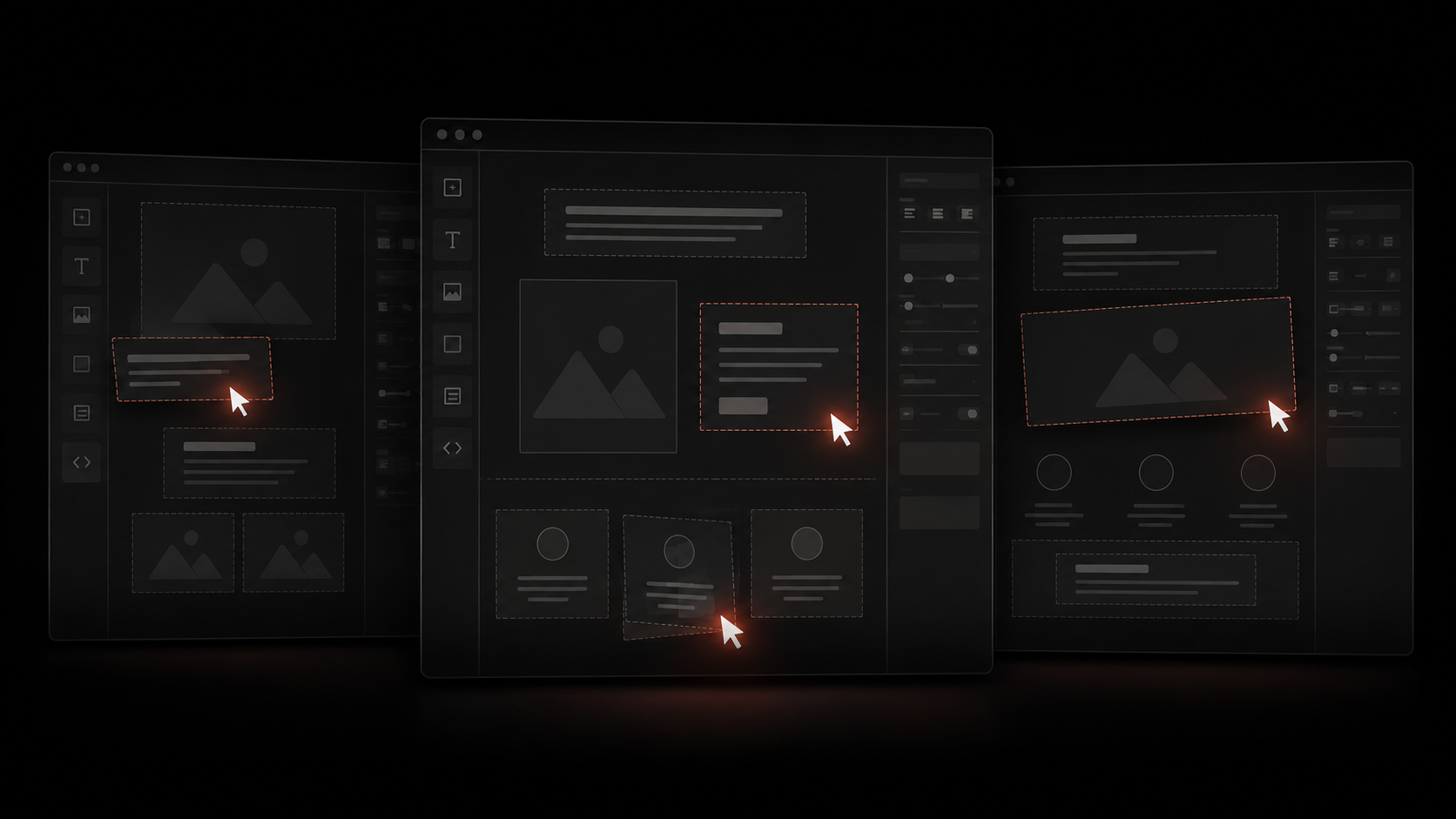
That polished design you see in Figma is a blueprint.
Development happens from there.
Why Cheap Websites and AI Builders Often Fail
Cheap websites do not always fail because they look bad.
They fail because they skip the invisible work.
They are built to look finished, not to function.
No Clear Positioning
Visitors land and think: "What exactly do you do?"
Weak Messaging
Everything sounds like everyone else.
No Structure
There is no clear path to take action.
No Conversion Logic
Nothing is guiding the user toward a decision.
The Hidden Cost
A weak website does not just sit there.
It also quietly:
- Loses leads
- Reduces trust
- Hurts SEO
- Misses revenue opportunities
Over time, this costs more than doing it right the first time.
What Actually Goes Into a Professional Website
A real website is not built in one step.
It is built in layers.
Step 1: Strategy
This is where everything starts.
Before anything is designed, decisions are made.
- What do you say?
- Who are you speaking to?
- What makes you different?
- What should someone do next?
Without this, everything else is guesswork.
Step 2: Design
Design is not decoration.
It is guidance.
It answers:
- Where should someone look?
- What should they feel?
- What should they do?
Every section has a purpose.
Step 3: Development
This is where the system is actually built.
This includes:
- Structuring every page properly
- Making it responsive across devices
- Setting up SEO foundations
- Connecting forms, tracking, and integrations
- Optimizing performance and speed
This is not exporting a file.
This is building infrastructure.
Real Project Breakdown (What You Are Actually Paying For)
Let’s walk through an example based on quality.
An 8 Page Business Website
Strategy
- Copy & message development
- Sitemap planning
- Conversion structure
Estimated: ~ $3,000
Design
- Custom layouts for each page
- Mobile and desktop considerations
- Visual hierarchy and UX decisions
Estimated: $8,000
Development
Building each page
CMS setup
SEO structure
Integrations
Responsive adjustments
Testing and optimization
Estimated: $8,000
Total Investment
$16,000+
A professional build designed to convert quality website traffic.
Where AI Fits
AI is powerful.
But it does not replace thinking.
It simply speeds up execution.
What AI Can Do
- Draft content
- Assist layouts
- Speed up intellectual workflows
- Follow intellectual frameworks
What It Cannot Do
- Understand your business deeply like a human would
- Carefully position you in your market
- Replicate Profueled strategy without our framework
The Reality
AI amplifies what you give it and what already exists.
If the foundation or prompting is weak, it produces more weak output.
If the framework & system is strong, it produces leverage.
Managed vs Owned Builds
Typical Agency Builds:
- Low upfront investment. High monthly subscription.
- Weak strategy & proper planning
- Agency owned & managed
- No CMS access for updates
- Agency dependency
Professional Client Owned Builds:
- Moderate upfront investment. Low yearly subscription.
- Strong strategy, design and build
- Client owned & managed
- Easy CMS access for updates
- Agency support when needed
Ownership Is the Part No One Talks About
This is one of the biggest differences.
With many low cost solutions:
- You are inside their platform
- You do not fully control the system
- Moving later can be difficult
With a properly built site:
You own the asset.
At Profueled:
- Your website is transferred to your own account at launch
- You retain full ownership
- You are not locked into working with us
We build in:
- WordPress
- SiteJet
This allows:
- Easier editing
- Long term flexibility
- Full control over your digital property
With us you are not renting your website.
You own it.
Final Thought
The difference is not price.
It is what the website is designed to do.
A cheap website exists.
A professional website performs.
Frequently Asked Questions
How long does it take?
Usually 4 to 8 weeks per phase depending on scope.
Do I own my website?
Yes. With Profueled, your website is transferred to your own account and remains your asset.