

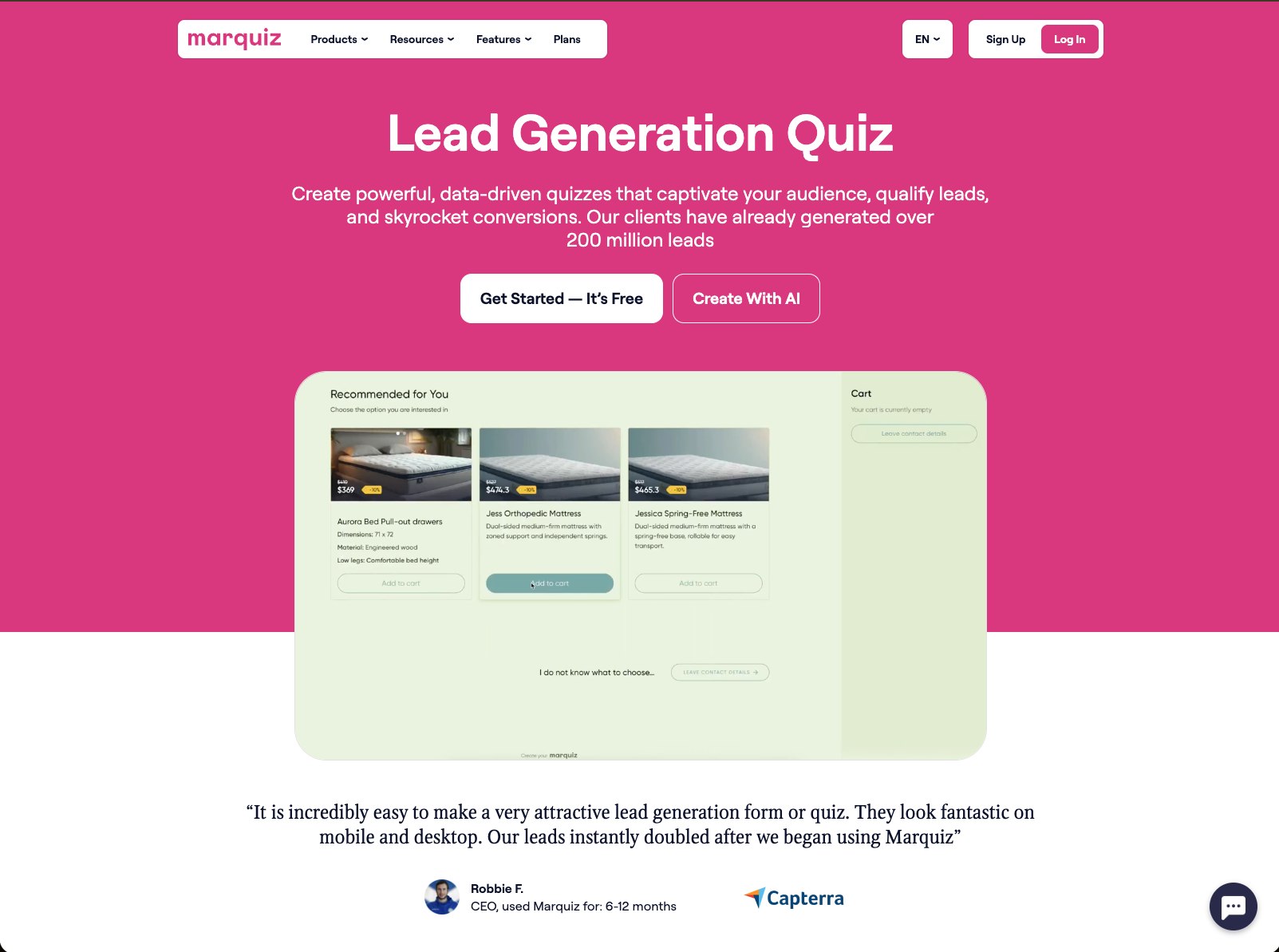

For years, online forms have been the default way businesses turn interest into leads.
They’re familiar. They’re simple. And on the surface, they appear efficient.
But as buyer behavior has evolved, forms have quietly become one of the weakest points in the modern customer journey — not because they’re broken, but because they ask too much, too early, from people who are still trying to understand what they need.
Increasingly, smart marketers are replacing forms with psychology-driven quizzes. Not to be clever. Not to entertain. But to reduce friction, improve clarity, and create a more respectful, human experience for the person on the other side of the screen.
This review looks at Marquiz through that lens — not as a “growth hack,” but as a decision-support tool, and why that distinction matters.
The Real Issue With Forms Isn’t Conversion — It’s Cognitive Load
Most discussions about conversion focus on tactics: better copy, stronger calls to action, cleaner design.
What they often miss is the deeper issue: forms force users to self-diagnose before they’re ready.
When someone lands on a page and is immediately asked to choose a plan, request a demo, or submit their details, they are being asked to answer a complex internal question:
“Is this right for me?”
That question requires context, confidence, and clarity — three things most visitors do not yet have.
Forms assume readiness.
Quizzes acknowledge uncertainty.
That difference alone explains why quizzes so often outperform traditional lead capture, especially in businesses with multiple offerings, nuanced services, or varied customer needs.

Why Quizzes Work: A Psychological Explanation
Quizzes are not inherently powerful because they are interactive. They are powerful because they align with how people naturally make decisions.
They reduce decision pressure
Rather than asking for a commitment up front, quizzes invite participation in small, low-risk steps. Answering a question feels easier than making a choice, and that sense of ease matters more than most marketers realize.
They create relevance through participation
When someone sees a result that reflects their own inputs, it carries more weight. The conclusion feels earned rather than imposed, which builds trust rather than resistance.
They provide clarity before action
Good quizzes do not end with a label or score. They end with guidance — helping someone understand what to do next and why that step makes sense for them specifically.
In other words, quizzes work because they support thinking, not because they distract from it.
Why Most Quizzes Fail (And Why Skepticism Is Reasonable)
It’s important to say this plainly: many quizzes deserve the skepticism they receive.
Poorly designed quizzes feel gimmicky, superficial, or manipulative. They ask questions that don’t matter, deliver results that don’t help, and prioritize novelty over usefulness.
These quizzes don’t build trust — they erode it.
The problem isn’t quizzes as a concept. It’s quizzes without intent.
A quiz designed to generate insight behaves very differently from a quiz designed to chase engagement metrics. Marquiz is firmly in the former category, which is why it’s worth discussing separately from the broader “quiz tool” landscape.
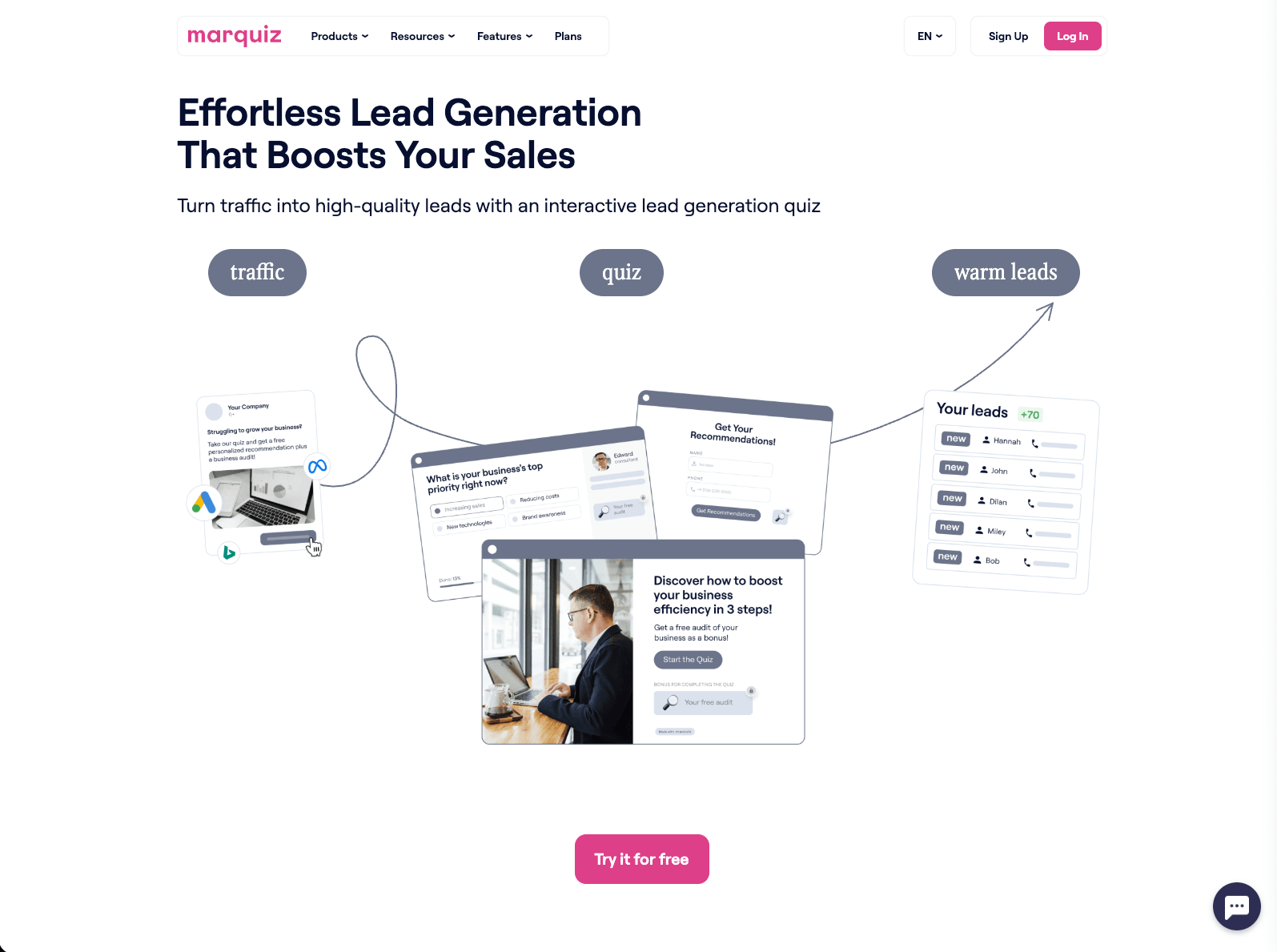
What Marquiz Is Designed to Do
Marquiz is not a viral content platform or an entertainment tool.
It is designed to act as a structured decision interface — something closer to a guided consultation than a marketing asset.
Its defining characteristics are subtle but important:
- Questions are conditional and context-aware, meaning users are not forced through irrelevant paths.
- Results are designed to clarify next steps, not merely summarize answers.
- The visual design is intentionally restrained, signaling professionalism rather than playfulness.
The result is an experience that feels thoughtful, calm, and credible — qualities that matter deeply in high-trust industries such as consulting, SaaS, coaching, and professional services.
Why This Matters Even If You Already Get Plenty of Leads
One common objection is: “We already get enough leads. Why change?”
This is a fair question — and also a limited one.
Conversion tools are not only about volume. They are about quality, alignment, and experience.
Even when lead flow is strong, quizzes can:
- Reduce the number of poorly matched inquiries
- Help prospects arrive at sales conversations better informed
- Signal care and intentionality in how you guide people
- Increase perceived credibility by showing you understand nuance
In many cases, the most meaningful benefit is not higher conversion rates, but better conversations and stronger trust before the first human interaction even happens.
When Marquiz Is Not the Right Tool
Marquiz is not universally necessary, and it’s important to be clear about that.
It may not be ideal if:
- You sell a single, simple product with little variation
- Your offer requires no qualification or explanation
- Your audience already knows exactly what they want and why
In those scenarios, a straightforward form may be sufficient.
Marquiz becomes valuable when clarity is the bottleneck — not traffic, not attention, but understanding.
Forms vs. Quizzes: A More Human Interface
Forms are efficient for data collection.
Quizzes are effective for decision-making.
That distinction explains why many teams are no longer adding quizzes as a supplement, but replacing forms entirely — especially at critical moments in the customer journey.
Marquiz doesn’t promise magic. It simply offers a more thoughtful way to meet people where they are mentally, not where we wish they were.
Final Perspective
Good marketing is not about persuading faster. It’s about removing unnecessary friction from how people think and decide.
Marquiz succeeds not because it is novel, but because it respects the complexity of human choice.
If your website is already performing well, Marquiz may not dramatically change your numbers overnight. What it will change is the experience — and over time, experience compounds into trust, trust into alignment, and alignment into better outcomes on both sides of the transaction.
If you’re curious to explore that approach:
Explore Marquiz and see how psychology-driven quizzes work in practice
Not as a replacement for strategy — but as an extension of it.
Transparency note: We use the Marquiz Plus plan in-house and are signed up as affiliate partners with a small number of tools we genuinely use and recommend. If you choose to explore Marquiz through one of our links, we may earn a referral fee — at no additional cost to you. This helps us continue testing tools deeply and sharing thoughtful, experience-based content like this.