

Introduction
If a designer quotes you $500 for a website, they're not building you a website. They're handing you a brochure with hosting attached.
That's not an insult. It's a description. A $500 site is a template with your logo swapped in and your copy pasted into placeholder boxes. It looks like a website. It has pages and links and maybe a contact form. But it was never designed to do anything. No strategy informed it. No architecture shaped how visitors move through it. No system runs underneath it.
It is, in the most literal sense, a surface with nothing behind it.
The problem isn't the price. The problem is what that price reveals about the process that produced it.
Professional websites cost more because professional websites are more. When you understand what you're actually paying for, the math becomes obvious, and the value of doing it right becomes undeniable.
The First Question Most Asks, and Why It's the Wrong One
"How much does a website cost?"
It's the most searched question in the industry. It's also the least useful way to start the conversation.
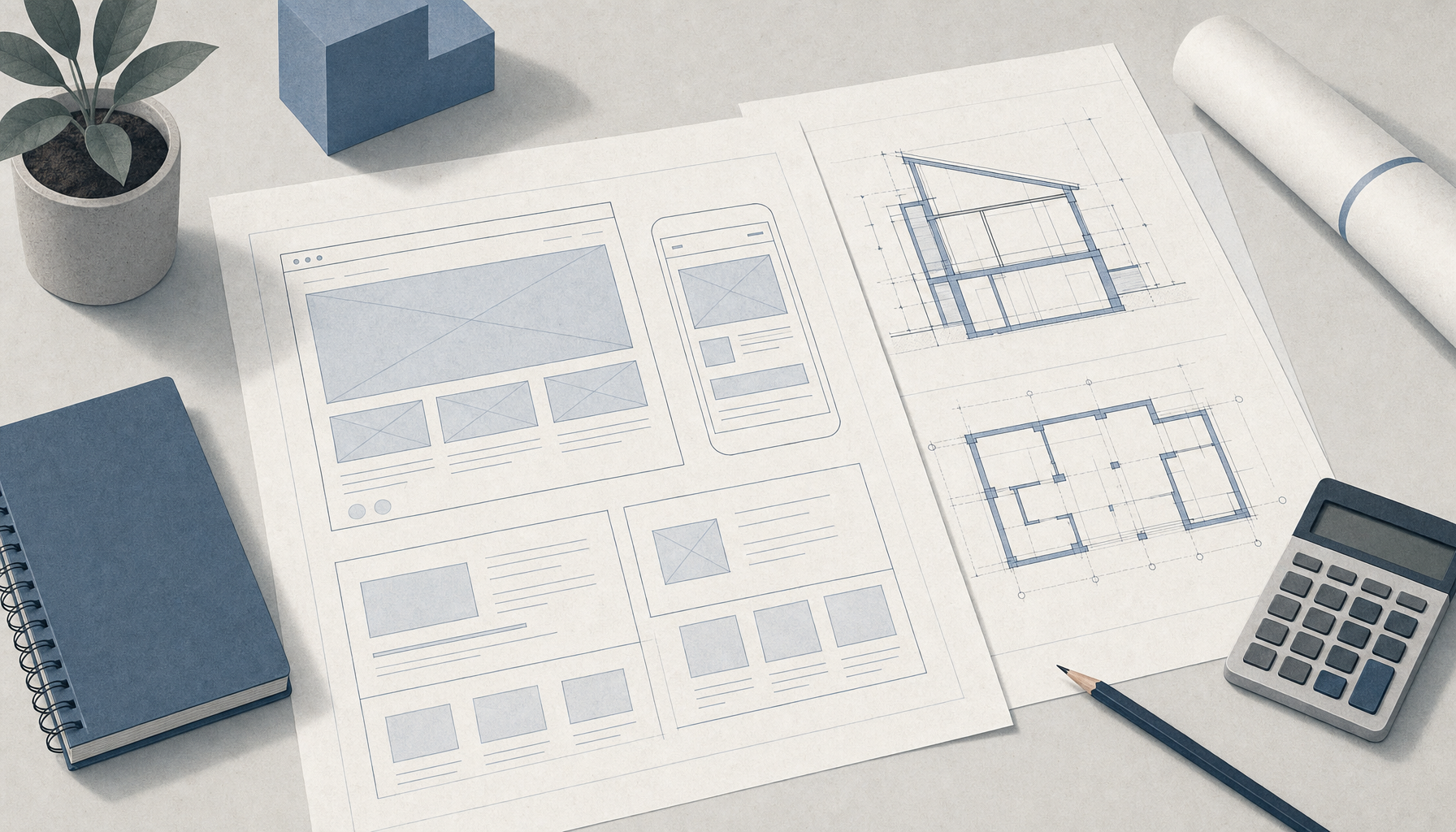
Asking "how much does a website cost" is like asking "how much does a building cost."
The answer depends entirely on what it needs to do, how many people it needs to hold, what systems need to run inside it, and how long it needs to last without collapsing.
A website is not a file. It is not a design. It is not a collection of pages.
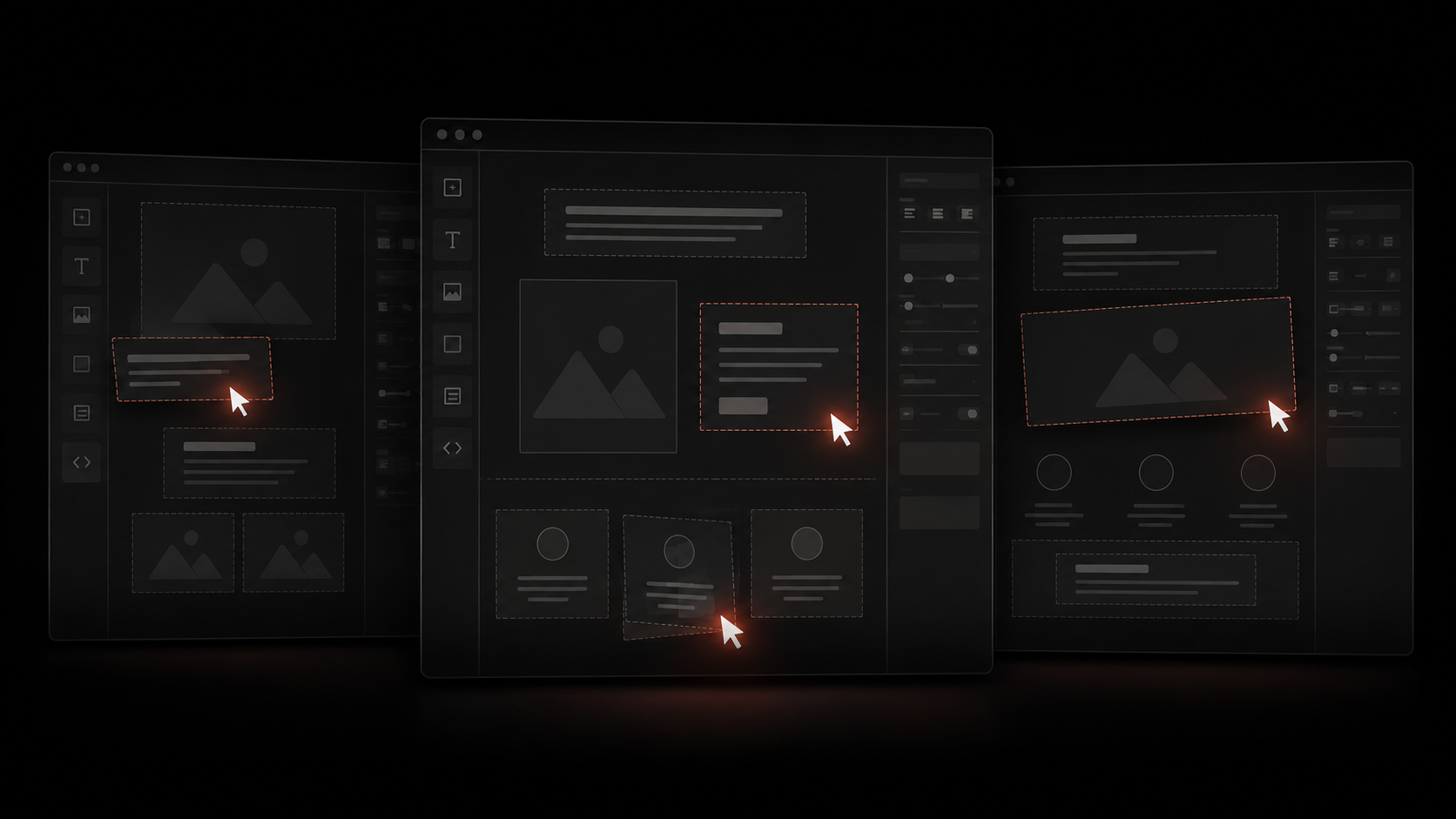
A professional website is a system: a structured environment where every element exists in relationship to every other element, where the narrative logic of page one informs what happens on page three, where the design language serves the persuasion architecture, not the other way around.
Once you understand that, the pricing conversation changes. You stop asking "how much does a page cost" and start asking "what needs to be built, in what order, and why."
That's the question that produces a real number.
What You're Actually Paying For: The Five Components
Most agencies quote a flat fee or a page rate with no explanation of what's inside. Here's what a rigorous build actually contains, and why each phase has a cost.
1. Discovery
Discovery is where the entire system gets defined.
Before any layout is sketched or any copy is written, a professional build begins with structured strategic work: What is this business trying to achieve? Who is the audience? What is the competitive landscape? What does this brand need to communicate, and in what order?
Discovery isn't a consultation call. It's the diagnostic phase that generates the blueprint every other phase depends on.
Skip Discovery and you're making design decisions in a vacuum. You're guessing at what matters instead of knowing. Every revision, every "this doesn't feel right," every third round of feedback on a homepage: that's the tax you pay for skipping Discovery at the front end.
At Profueled, Discovery defines the strategic direction before a single wireframe is touched. It is not optional. It is the phase that makes everything else faster.
2. Information Architecture
Once you know what the site needs to accomplish, the next question is: how does it get built to accomplish it?
Information Architecture (IA) is the structural logic of your site: which pages exist, in what order, with what content, connected to what user flows. It is the blueprint before the blueprints.
IA determines whether visitors can find what they're looking for in two clicks or seven. It determines whether your most persuasive content appears when visitors are ready to be persuaded, or buried where no one will find it. It determines whether your site is discoverable by search engines, because crawlable structure is a foundation of SEO, not a plugin you add afterward.
Poor IA is the reason most sites "don't convert." It's rarely a copy problem or a design problem. It's an architecture problem: the information is there, but it's assembled, not intentional.
3. Narrative
Narrative is the writing and messaging layer, but not in the way most people think about copy.
Narrative in a professional build is not about writing catchy taglines. It is about sequencing. What does the visitor need to understand first? What objection needs to be addressed before the ask is made? What story do visitors need to walk through before they trust you enough to click "contact"?
Persuasion is not clever phrasing. It is correct sequencing.
The Narrative phase produces a persuasion map: a documented logic for what each page communicates, in what order, and why. It runs underneath every headline, every paragraph, every section transition. When Narrative is built correctly, visitors feel like the site "just makes sense." They can't explain why. A natural flow and feel is the point.
4. Design System
Design is not decoration. Design is a system of decisions.
A professional Design System establishes the visual rules that govern every element across your site: typography scale, color relationships, spacing logic, component library, motion behavior. When done correctly, a Design System means that every page feels like it belongs to the same world, because it does.
Without a Design System, you get a site that looks "fine" on the homepage and increasingly inconsistent the deeper you go. Inner pages feel like they were designed by a different person. Blog posts look disconnected from the services page. The trust signals that a unified visual language creates start to break down.
Design Systems also produce a compound return. When you need to add a page six months from now, the system already knows what it should look like. You're not starting from scratch. You're adding a module to an existing architecture.
At Profueled, design starts at $300 per page and development starts at $1,000 per page, because every page is not a fresh canvas. Every page is a module inside a system.
5. Development
Development is where the system gets built in code.
A professional development engagement translates the Design System into a live environment: responsive across devices, accessible to users and search engines, performant under real-world conditions, and maintainable by the people who will own it after launch.
The gap between a competent developer and a cheap one is not visible on day one. It becomes visible in month six when the site breaks on a tablet, when a content update rewrites the layout, when a plugin conflict takes down the contact form for a week without anyone noticing.
Development is infrastructure. It either holds weight or it doesn't.
The Real Pricing Math
A complete professional build for a growing service business (the kind that needs to rank, convert, and hold up to scrutiny) typically covers seven to eight pages: Home, About, Services (often two to three service pages), a Contact page, and sometimes a Blog or FAQ.
At Profueled, a seven-page build runs from $7,000 to $14,000+, depending on complexity. That range isn't arbitrary. It reflects how much strategic work is required at the Discovery and Information phases, how complex the Narrative architecture needs to be, how layered the Design System is, and how sophisticated the development requirements are.
Complexity sets price. Not page count.
A five-page site with a multi-step intake form, integrated CRM logic, e-commerce components, or multilingual requirements is more complex (and more expensive) than a seven-page site without those elements. A site that needs to rank for competitive keywords requires more IA and Discovery investment than one in a low-competition niche.
When an agency gives you a flat rate without asking those questions first, that's your signal they haven't thought about your site yet. They're pricing a template. You're buying one.
What's Included
- Financing is available through Klarna for qualified projects, because access to a professional build shouldn't be contingent on a single lump-sum payment
- Every project includes 30-day post-launch support at no additional cost
- Issues, adjustments, and edge cases that surface after go-live are part of the engagement
- No surprise invoices, no long-term contracts
The Dependency Map Is the Price Explanation
The reason professional websites cost what they cost comes back to one concept: the dependency map.
Discovery informs architecture. Architecture shapes narrative. Narrative drives design.
Design systems enable modular, intentional builds.
Every phase builds on the last. Nothing is random.
This is the operating system that runs under every project at Profueled. And it is why the question "how much does a page cost" misses the point. Pages don't have independent costs. They have costs relative to the system they belong to.
A homepage that was designed without a narrative strategy is just a picture with words. A homepage that was designed after Discovery, after IA, after a full persuasion map has been built: that is a first page in a logical sequence. It is doing work. Every section advances the argument. Every visual decision supports the message. Every link sends the visitor where they should go next.
That's what the price buys. Not a page. A system.
Why We Say "Outperforms"
We've said it before and we'll say it again: every site we've built outperforms the one it replaced.
Not because we use better plugins or newer design trends. Because we build in the correct sequence. Because by the time we design a single element, we know exactly what it needs to accomplish. Because the system underneath the surface is intentional, and intentional systems produce better results than assembled ones, every time.
We don't publish specific conversion percentages or traffic numbers, because we don't think cherry-picked metrics tell an honest story. What we can say is this: a site built with locked direction, unified architecture, and persuasion-sequenced narrative is structurally different from a site that wasn't. The difference is visible in the work and measurable in the business.
The Standard Answer to "How Much?" Is a Bad Answer
Most pricing guides will give you a range ($500 to $50,000) and explain the high end as "enterprise" and the low end as "DIY." What they won't do is explain why the range exists.
The range exists because of everything above. Because some builds begin with Discovery and some skip it entirely. Because some builds have a defined Information Architecture and some just have a sitemap someone sketched in five minutes. Because some Design Systems are built to last and some are built to look good in the demo.
The industry optimized for speed. We optimized for alignment.
That choice shows up in the work. And it shows up in the price, because alignment takes structured effort, and structured effort takes time.
If your site is going to represent your business, earn trust on your behalf, generate leads while you sleep, and hold up to the scrutiny of a prospective client who spends eight minutes reading before they decide, it deserves the process that produces that outcome.
Conclusion
The Profueled Framework (Structure, Strategy, Direction) exists precisely because pricing conversations only make sense after the structure is defined. Cost follows complexity.
Complexity follows goals. Goals follow Discovery. That's the dependency map in action.
If you're trying to understand what your project should cost, the first conversation isn't about pages or platforms. It's about what the site needs to do and what's standing in the way.
That conversation is free.
Book a free strategy call. We'll define the scope, identify the complexity, and give you a number that reflects what your business actually needs, not what a template costs.
Structure before everything else.